
Sovereign S3 storage: what the term covers
Sovereign S3 is a market term, not a certificate. See which layers matter, which S3 settings keep control with you, and which Luxembourg rules apply.
Sep 30, 2026
Standard data center racks are built for 3 to 5 kW. Modern AI compute draws 15 to 40 kW per cabinet. Here is how power delivery and cooling adapt.
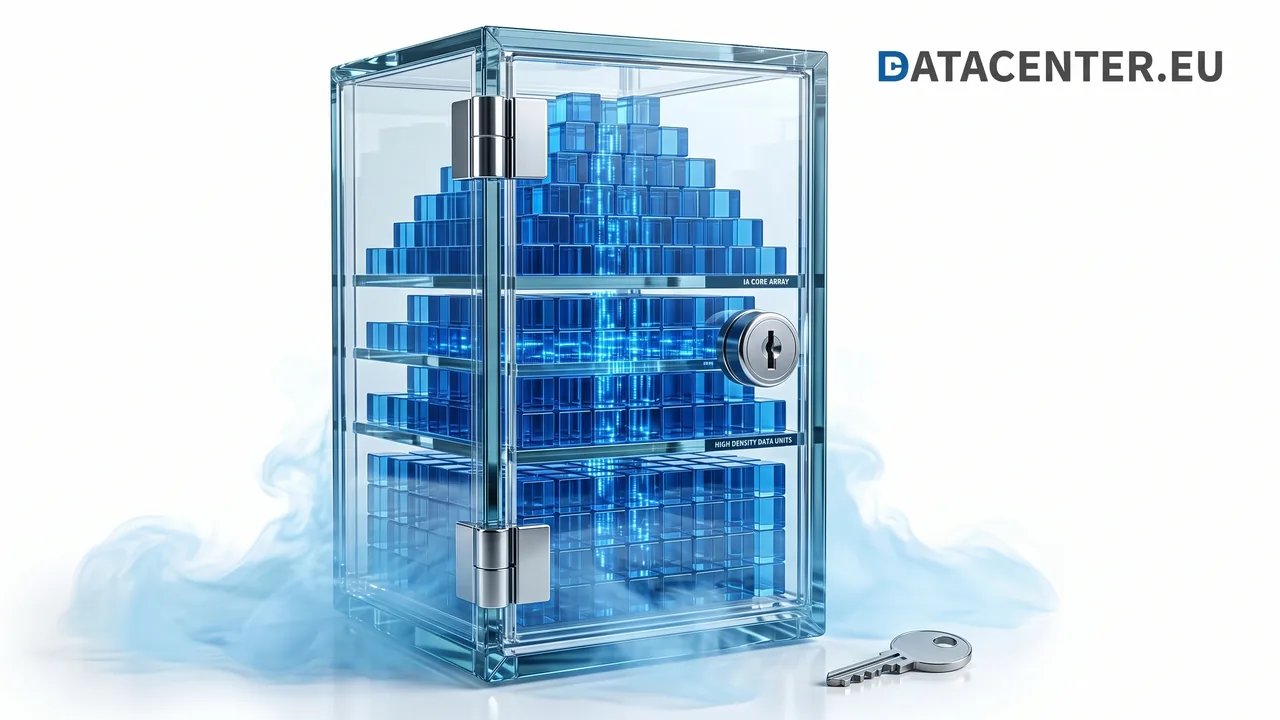
For over two decades, the standard commercial data center rack operated on a predictable power profile: 3 kW to 6 kW per cabinet. Traditional enterprise workloads—web servers, relational databases, and corporate virtualization clusters—fit comfortably within these thermal and electrical envelopes.
The rapid deployment of specialized accelerator hardware (GPUs, NPUs, and dense storage arrays) has broken this baseline. A single 4U chassis populated with modern compute accelerators can draw 8 kW to 10 kW alone. Stacking multiple units into a single cabinet pushes rack density beyond 25 kW or even 40 kW. Operating this equipment requires an infrastructure built around three fundamental physical engineering shifts.
Delivering 30 kW through legacy single-phase electrical lines requires thick, inflexible copper cabling that creates thermal resistance and congests rack pathways. High-density infrastructure resolves this through three-phase power distribution directly to intelligent rack PDUs (Power Distribution Units):
400V three-phase feeds: Pushing higher voltage allows thinner cabling, lower transmission losses, and balanced current draw across phases.
Granular busway systems: Overhead power tracks replace underfloor conduits, allowing power whips to be dropped directly where dense compute lives without disrupting airflow.
Branch circuit monitoring: Real-time per-outlet telemetry tracks amperage fluctuations and prevents breaker trips during unexpected computational spikes.
At 30 kW, simple cold air diffusion through raised floor tiles fails. Hot exhaust air quickly recirculates over the top of the rack, causing compute blades in upper units to throttle clock speeds due to thermal limits.
Controlling extreme heat requires strict physical separation of airflow:
Hot-Aisle Containment (HAC): The entire rear exhaust corridor is physically sealed with solid doors and roof panels, funneling hot exhaust directly back into cooling units without contaminating the ambient room.
In-row cooling units: Placing close-coupled cooling units between server racks shortens the airflow loop from meters to centimeters, drastically lowering the energy needed to push air.
Blanking panels on every empty U: An open 1U slot in a high-density cabinet allows hot air to bypass back into server intakes, degrading cooling efficiency instantly.
Air cooling reaches a hard physical limit around 35 to 40 kW per rack. Beyond this threshold, air alone cannot transport thermal energy away from high-TDP processor dies quickly enough without fan power consumption becoming economically unfeasible.
Modern facilities prepare for this transition through liquid-ready architecture:
Secondary Fluid Networks: Dedicated piping infrastructure providing chilled fluid loops directly to rack manifolds.
Rear-door heat exchangers (RDHx): Closed-loop chilled water coils mounted directly to the rack door, neutralizing 100% of heat before it ever exits into the facility aisle.
Zero ambient impact: Liquid-assisted compute allows operators to increase rack density without raising the overall ambient room temperature.
Before racking GPU clusters or high-density hardware, verify these requirements with the facility operator:
Floor load capacity: Dense accelerator nodes and heavy copper heat sinks often exceed standard raised-floor weight ratings (verify kg/m² limits).
Guaranteed continuous power: Confirm UPS battery systems and standby generators are rated for continuous kVA output without derating under high load.
Air containment discipline: Ensure the facility actively enforces hot- or cold-aisle containment rather than running open floor layouts.
Can I run high-density AI servers in a standard colocation rack?
Rarely without modification. Standard enterprise racks only provide 16A to 32A single-phase feeds and depend on ambient perimeter cooling, which quickly leads to thermal throttling on high-TDP hardware. You need dedicated three-phase power lines and contained airflow.
When does liquid cooling become strictly necessary?
Air cooling with hot-aisle containment works reliably up to roughly 30 kW to 35 kW per cabinet. Once you cross that threshold—or if modern accelerator chips mandate direct-to-chip cold plates to operate at full clock speed—liquid-assisted cooling or rear-door heat exchangers become mandatory.
Does a 30 kW rack triple the overall cooling bill?
Not if the facility is engineered for high density. Close-coupled in-row cooling and containment drastically shorten airflow distance, resulting in a significantly lower PUE overhead compared to pushing chilled air across an entire legacy open-room floor.
Sovereign S3 is a market term, not a certificate. See which layers matter, which S3 settings keep control with you, and which Luxembourg rules apply.
SMOX is a locally hosted AI platform operated by Datacenter Luxembourg. This guide explains what its API offers and how to assess a sovereign AI service.
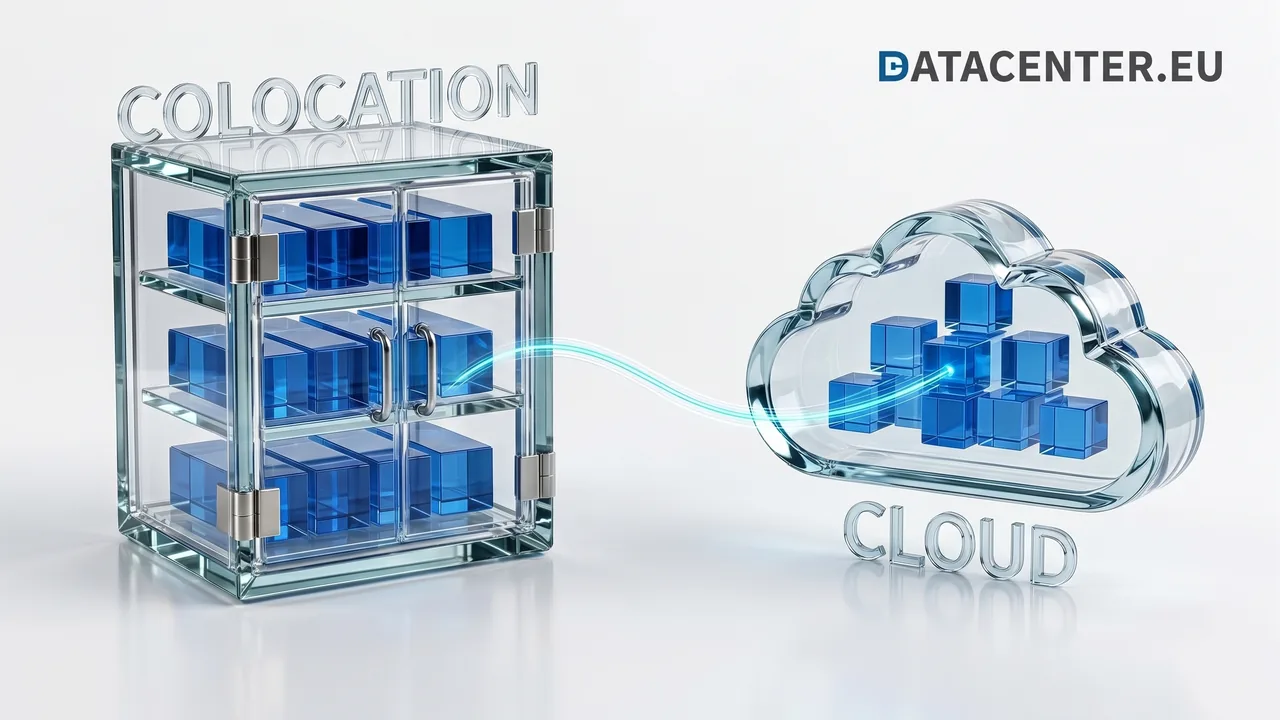
Both put your workload in a professional datacenter. They differ in who owns the hardware, who carries the risk, and how you pay for it.