
Sovereign S3 storage: what the term covers
Sovereign S3 is a market term, not a certificate. See which layers matter, which S3 settings keep control with you, and which Luxembourg rules apply.
Sep 30, 2026
Both put your workload in a professional datacenter. They differ in who owns the hardware, who carries the risk, and how you pay for it.
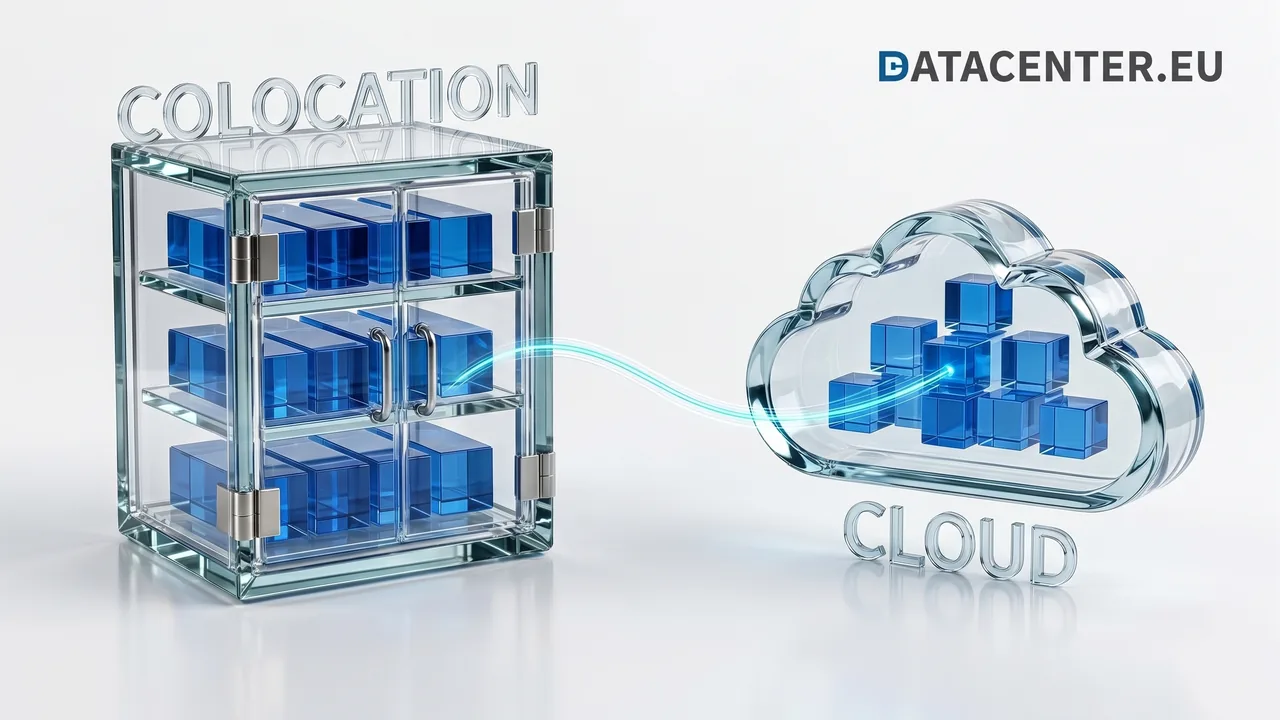
Colocation means you own the servers and rent everything around them: the rack, the power, the cooling, the connectivity and the physical security. Cloud means you rent the compute itself, and somebody else owns and replaces the hardware.
Most Luxembourg businesses end up running both. The question is rarely which one wins. It is which workload belongs where.
Colocation suits a workload that is steady, predictable and already running on hardware you own.
You have bought the servers, and they have years of life left.
The load does not change much from month to month, so elastic capacity buys you nothing.
A regulator, a customer contract or an internal policy says the data stays in Luxembourg, on equipment you control.
You need a specific hardware configuration that no cloud catalogue offers.
Cloud suits a workload whose size you cannot predict, or one you do not want to own hardware for at all.
Demand is spiky, seasonal, or growing faster than a purchase cycle.
You want to start in days rather than after a delivery lead time.
The application is new, and you would rather discover its real size than guess it.
You want the provider to carry the hardware refresh, not your balance sheet.
Who should carry the hardware risk? If a failed disk at three in the morning is your problem, that is colocation. If it is somebody else's problem, that is cloud.
How predictable is the load? Steady load rewards owning. Spiky load rewards renting.
What does the contract say about where the data lives? Both answers can satisfy a Luxembourg residency requirement, but only if you check the specific facility, not the brochure.
What is the exit? Moving out of a rack is a logistics job. Moving out of a cloud is an engineering job. Ask the question before you sign, not after.
Can I run both at once?
Yes, and most organisations do. A common pattern keeps the steady core systems in a rack and puts test, development and burst capacity in the cloud, with a private link between the two.
Is colocation cheaper than cloud?
Over a long enough horizon with steady load, usually. Over a short horizon with unpredictable load, usually not. Compare the total over the life of the hardware, not the monthly line item.
What happens to my colocation hardware when it ages out?
You replace it, on your own schedule. That is the trade: you keep the control and you keep the refresh.

Sovereign S3 is a market term, not a certificate. See which layers matter, which S3 settings keep control with you, and which Luxembourg rules apply.

Roadworks and civil digging cut underground fiber lines every single day. Here is what protects enterprise infrastructure from going dark when physical lines snap.

Both keep your data in a secure facility. They differ in which laws govern your infrastructure, who can legally access it, and where true jurisdiction lies.